

Which Pressure Washer Is Right For The Job?
Hot water and cold water pressure washers may look similar, but they clean very differently. The right choice depends on what you are cleaning, how much grease is involved, and how fast you need the job done.
What’s the Difference Between Hot Water and Cold Water Pressure Washers?
All high pressure washers are not created equal. Pressure cleaning systems usually fall into two very distinct categories: hot water pressure washers and cold water pressure washers.
Because both hot and cold water pressure washers can have similar flow rates, pressure, and cleaning capability, the best choice comes down to the type of mess you need to remove.
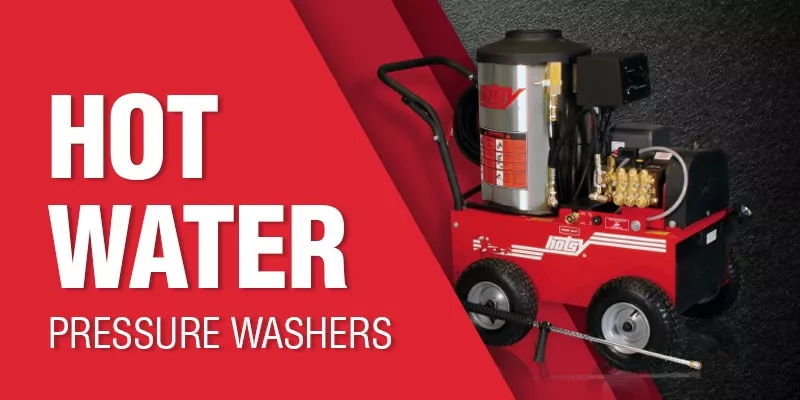
Designed to Cut Through Oil and Grease
Think of it like washing greasy dishes in the sink. Cold water can smear grease around, even with soap. Add hot water, and it cuts through grease and oil much faster. If oil or grease is present, hot water is usually the better choice.
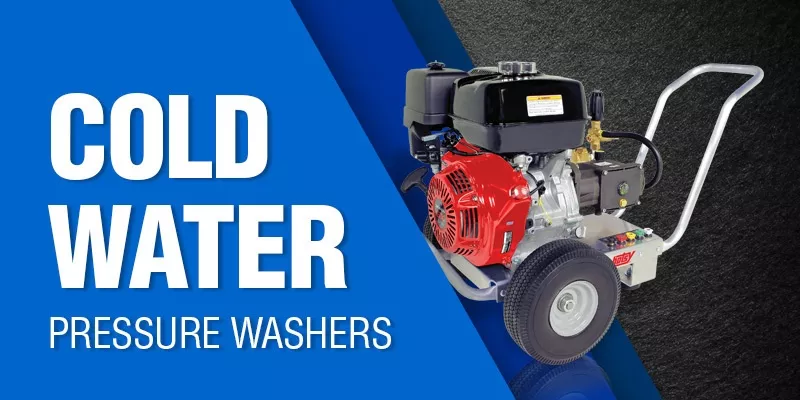
Perfect for Dirt, Soil, Mud, and Sand
Cold water pressure washers are ideal for removing dirt and general buildup. However, if the surface is mixed with oil or grease, cold water usually will not clean as quickly or effectively as hot water.
Match the Washer to the Mess
Cold water is great for everyday buildup. Hot water is the better option when grease, oil, food residue, or heavy grime is involved.
Use Hot Water For
- Oil and grease cleanup
- Engines and automotive parts
- Heavy equipment
- Food processing areas
- Faster cleaning with less detergent
Use Cold Water For
- Dirt, mud, and sand
- General outdoor cleaning
- Rinsing and surface prep
- Paint stripping applications
- Jobs where heat is not required
The Science Behind How Hot Water Pressure Washers Work
Hot water packs a powerful energetic punch when released into the cleaning equation. This energy also causes a reduction in the water’s surface tension, allowing it to more effectively penetrate grease and grime.
There are three key elements to a hot water pressure washer: heat, agitation, and soap.
- Heat creates high-speed molecular action that makes the cleaning agent more active and reduces water’s surface tension.
- Agitation is the impact that comes from water volume and water pressure hitting the surface.
- Soap, often called detergent, chemically breaks the bond between dirt and the surface so grime can be carried away.
What Does This Have To Do With a Hot Water Pressure Washer?
Hot water pressure washers bring together heat, agitation, and soap to deliver a powerful cleaning punch.
How Do You Know When To Use Hot Water?
If you are cleaning engines, automotive parts, or anything with oil or grease, you will need hot water. Like the dishes in your sink, hot water melts grease and grime. Cold water usually only pushes it around.
If you are blasting away sand, caked-on mud, or stripping paint, a cold water pressure washer can work just fine. Combined with detergent, a cold water pressure washer can be very effective in many applications.
The rule of thumb is simple: whatever cold water cleans, hot water will usually clean better and faster.
Does a Hot Water Pressure Washer Cost More?
Yes. Hot water pressure washers can cost more because they include systems for heating water while under pressure. They also require more preventive maintenance, including burner assembly, coil, and excess-pressure protection checks.
Still, hot water pressure washers can pay for themselves through labor savings by delivering a faster and more effective cleaning method.
How Is Water Heated in a Pressure Washer?
Water enters a pressure washer from a spigot or tank through a hose. It first passes through a high-pressure pump, which sends the water through a heating coil. By the time water exits through the wand and nozzle, it can reach temperatures up to 200°F.
Is a Steam Cleaner the Same as a Hot Water Pressure Washer?
Hot water pressure washers are sometimes called steam cleaners, but they are not always the same thing. Hot water under high pressure is often more effective for general cleaning because it combines heat with agitation from high-pressure water volume.
Some systems offer a steam combination option where water is superheated to create a saturated steam effect for applications that require higher temperature cleaning.
Need Help Choosing the Right Pressure Washer?
Hot water, cold water, gas, electric, portable, or stationary — the right equipment depends on your cleaning job. Compare your options and choose the washer that saves the most time on your toughest jobs.